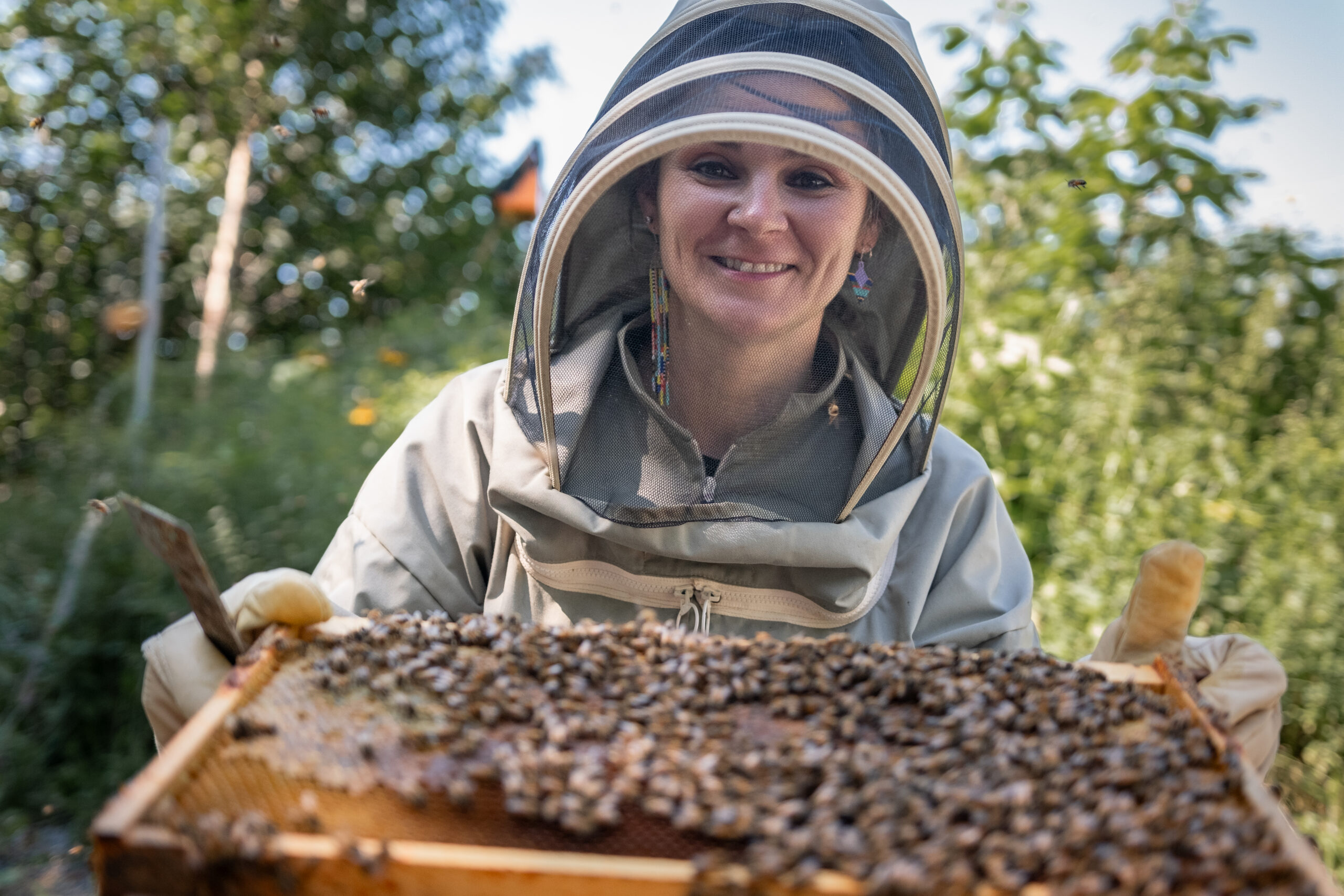
With a full body suit and face mask, and a smoking canister at her side, Amanda Oake steps out the backdoor of her Cafe and The Beestro, and walks down the dirt path, to the boxes of honeybees behind an electric fence.
Constant streams of bees move in and out, as Amanda opens the crate, and pulls out honeycomb-covered panels that drip with raw honey.
Occasionally, drone bees meet us face to face. They are trying to figure out if we are a danger to the hive or not. Amanda is calm, gentle, and deliberate, as she pries the wooden frames from the boxes, to expose the inner workings of the hive. She is looking for the queens, to make sure they are thriving.
These bees spend the summer gathering pollen and creating a unique blend of flavours directly from the forest. The hives are only harvested once a year, to preserve this distinct flavour profile and to be used and sold as raw, unpasteurized, antibiotic-free honey.
At the same time, these bees are serving a foundational function for the forest. They directly allow the neighbouring plants to flourish. Just like the honeybees, Amanda and Nathan intend for their business, Pollen Nation Farm, to act the same way for their surrounding communities.
“Nobody is going to come to Newfoundland for one good restaurant,” Amanda said. “They’re going to come for a plethora. They are going to have a food experience. They are going to come and be able to learn about bees in the process. And if we’re successful, other people will be successful.”
Pollen Nation started by wanting to make use of Nathan Hornidge’s experience as a Red Seal chef, working around the country and Amanda’s growing interest in honeybees, her background in biology, and her love for the area she grew up in.
“Our whole vision was to take Nathan’s skill set, his culinary skill set, and we wanted to create this sense of community in the valley and bring people together in different ways,” Amanda said.