
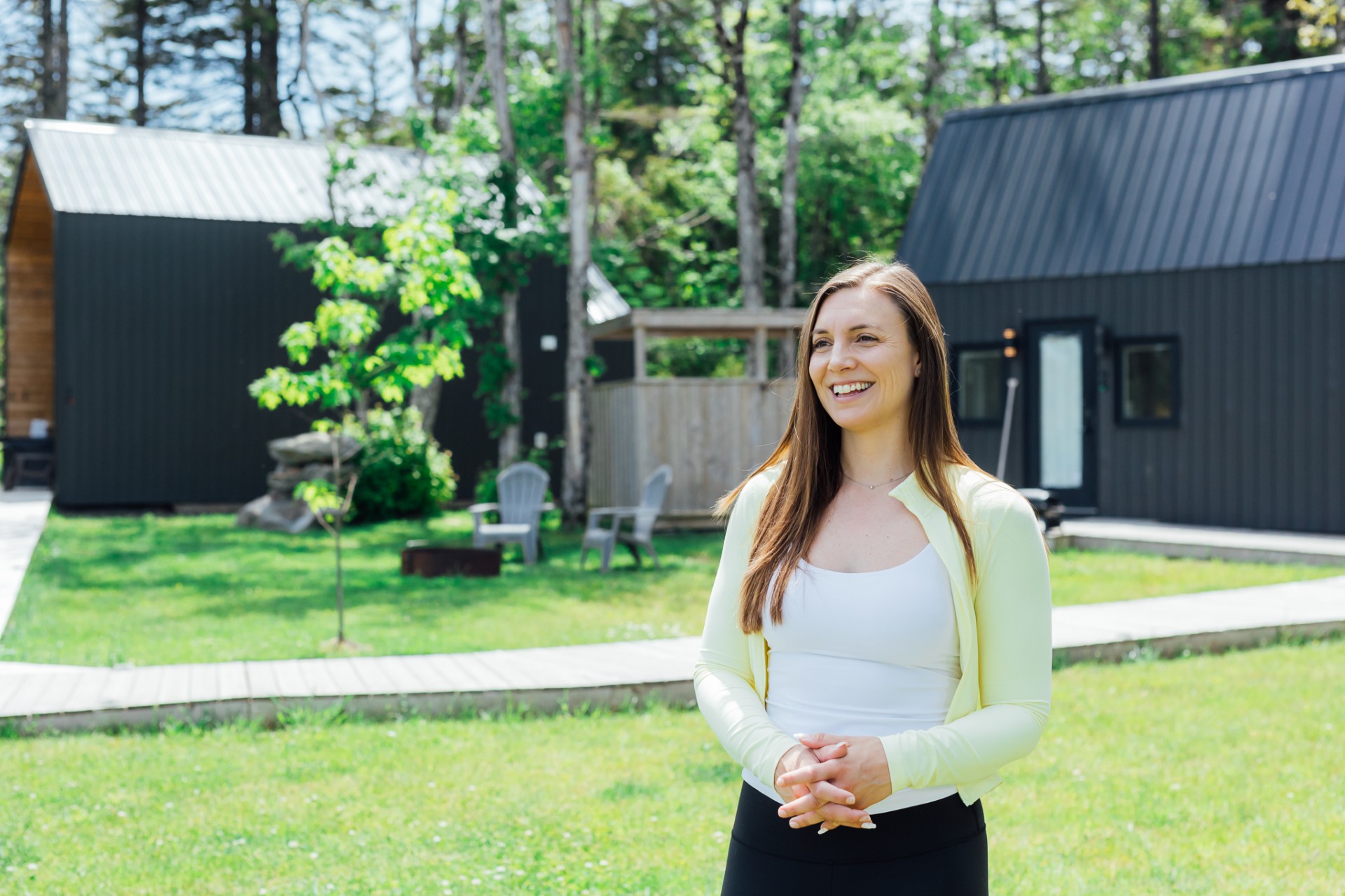
Tiny Village & Marina: Built by Hand, Shaped by Guests
On the shore of Clearwater Lake in Meteghan River, Nova Scotia, Tiny Village & Marina feels less like a conventional resort than a place that slowly revealed what it wanted to become.
For owner Patrick Desautels, it began with a simple move. There was a small cottage his uncle had built years earlier, sitting on another piece of land. Near the end of COVID, Patrick decided to bring it next door onto the family property. “I just decided to move it,” he says. Soon after, local contractors heard about the cottage and asked if they could rent it for the summer.
From there, Patrick says, the business “kind of happened without even knowing it.”
What started as one cabin has grown into Tiny Village & Marina, a family-built, year-round lakefront retreat with five handcrafted homes, private hot tubs, a Nordic spa experience, and a wellness studio. The property sits on land Patrick’s grandparents first purchased in 1958, a place where generations of family summers were shaped by the lake, the shoreline, and the quiet that still draws people in today.
Built One Cabin at a Time
Patrick – an electrician by trade – did not begin with a formal business plan. He began with tools, instinct, and momentum. “There was no business plan,” he laughs. “Just one day to the other, and it just kept going.”
That practical, hands-on approach is still at the heart of the business. Patrick built much of the village himself, with help from friends and family. “It was all done in house,” he says. The tiny home concept felt right for the land and the moment. During the pandemic, more people were travelling close to home, looking for smaller stays, outdoor experiences, and a different pace. Patrick liked that the tiny homes kept the footprint modest while giving guests a comfortable place to settle in.
Over time, the village evolved by listening. Guests came, stayed, reviewed, offered ideas, and returned. Patrick paid attention. “This is how the village was built,” he says. “Feedback and reviews and ideas by other people.”
At first, the guests were often younger travellers and adventurers. Then another audience began arriving. “The baby boomers started to show up,” Patrick recalls with a laugh. That changed how he thought about future buildings. Loft beds and ladders worked for some visitors, but not for everyone. Patrick began planning more accessible, easier-to-navigate accommodations for guests with “bad hips and bad knees and bad backs.”
That willingness to adapt has helped Tiny Village grow from a charming lakeside rental into something closer to a small wellness destination. Each accommodation has a private hot tub, and the shared Nordic spa circuit adds a wood-burning sauna, wood-fired hot tub, cold plunge tubs, a cold shower bucket, and places to rest by the fire. Patrick knew there was interest in that kind of experience, so he approached CBDC Digby-Clare for support.
“I saw there was a big interest,” he says. “A lot of people wanted to decompress.” With help from Rose Madden at CBDC Digby-Clare, the village added wellness offerings and a studio where guests and local instructors can gather for movement, stretching, yoga, Pilates, breathwork, and other classes.
Patrick had known Rose before she joined CBDC and describes the relationship warmly. “CBDC’s always been good to us, to me,” he says. “Super, super great.”
A Place to Slow Down in Every Season
The result is a place that works in every season. In summer, guests paddle on Clearwater Lake, swim, sit by the fire, or take day trips along the Acadian Shore. In fall, the colours do much of the talking. In winter, the hot tubs and sauna become even more inviting.
In a province better known for seasonal tourism, Patrick is delighted that winter has become part of the appeal. “The more snow we have, the more people come and visit us,” he says.
Guests now arrive from across Nova Scotia, New Brunswick, Quebec, the United States, and far beyond. Patrick mentions visitors from Germany, France, Australia, New Zealand, and China. Some use Tiny Village as a one-night stop before catching the ferry in Yarmouth. Others return for longer stays, season after season. Instagram helps fill openings quickly, but word of mouth does much of the heavy lifting. Many guests refer friends, family, and parents. “It’s almost easy,” Patrick says.
Still, the ease guests feel is built on a great deal of work behind the scenes. Patrick is quick to credit his family. “Without my family, the village wouldn’t be here,” he says. His children are still young, but interest is beginning to grow. The family has talked about adding a coffee shop, and Patrick says his daughter has already put her name forward to work there.
The business has also developed a personality all its own, helped along by three resident cats. Their arrival, like much of the Tiny Village story, was unexpected. After a neighbour passed away, several cats made their way to Patrick’s property. The SPCA helped with the others, but three stayed. Now, they have become part of the guest experience.
One cat, Milene, is especially fond of the spa area. In winter, she sleeps near the heated wood-fired hot tub, then makes her way into the sauna to stretch out on the bench. Guests take photos, read signs about each cat’s personality, and happily give them attention. “They’re a big attraction in the village,” Patrick says.
Tiny Village is pet-friendly for guests too, welcoming dogs and, occasionally, more unusual companions. Patrick recalls cats and even a parrot visiting. At the same time, the business has shifted to an adults-only model, a decision made with the lake, hot tubs, spa amenities, and other guests in mind. The change, he says, has been well received.
Reflecting on Success, Dreaming of the Future
For Patrick, the best part remains a mix of building and meeting people. He enjoys making his rounds, checking the sauna, the fires, and the hot tub, and chatting with guests along the way. “I just try to hear people’s stories,” he says.
That openness has shaped the atmosphere. Patrick is not especially interested in forcing guests into a rigid itinerary or packaged experience. People arrive with different ideas of rest. Some want to explore. Some want to paddle. Some want the studio. Some want to sit in a hot tub and let the world go quiet.
“Everybody’s got their own agenda,” he says. “I want them to come and decompress, do whatever they want. They can choose their own adventure.”
Looking ahead, Patrick sees more building in the future. A coffee shop is high on the list, followed by more accessible accommodations. But the heart of the place will remain what it has been from the beginning: family land, practical craftsmanship, guest feedback, and a deep sense that the lake itself knows how to slow people down.
Asked about his proudest moment, Patrick does not point to one grand opening or milestone. For him, pride is quieter and more constant.
“I think every day I’m proud of it,” he says. “Every time I see people coming in.”